Can Animals Eat Lamb's Quarters?
Lamb's quarters is generally safe and beneficial for many domestic animals. It's nutritious forage with high vitamin and mineral content. Here's a species-by-species safety guide.
Animal-by-Animal Guide
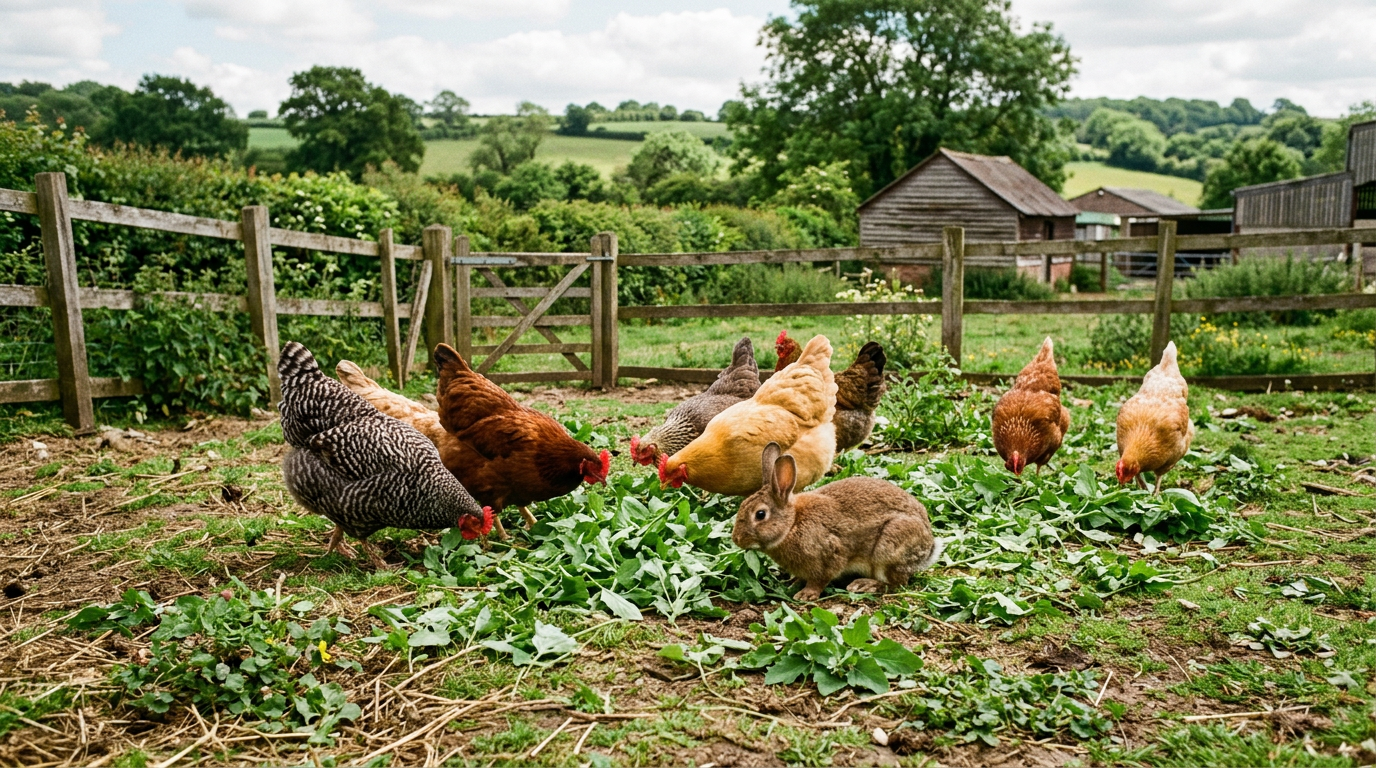
Rabbits
SafeSafe in moderation. Feed fresh leaves 1–2 times per week as part of a varied leafy green rotation. High oxalate content means don't overfeed. Good source of vitamins A, C, and K for rabbits. Introduce slowly to avoid digestive upset.
Goats
SafeSafe and nutritious. Goats love it and self-regulate well. Both fresh and dried are fine. Excellent forage plant. One caution: avoid feeding large amounts from drought-stressed or frost-damaged plants (potential nitrate accumulation).
Chickens
SafeExcellent supplement. Chickens peck at it readily. High nutrient content benefits egg quality and overall health. Feed fresh, wilted, or dried. One of the best free forage plants for backyard flocks.
Guinea Pigs
SafeSafe in moderation, like other leafy greens. High oxalates mean limit to 1–2 small servings per week. Variety is key in guinea pig diets. Introduce slowly. Good source of vitamin C, which guinea pigs cannot produce on their own.
Cattle
SafeCommonly found in pastures and grazed readily. Nutritious forage. Normal mixed pasture consumption is perfectly fine. Caution with stressed plants: lamb's quarters can accumulate nitrates under drought or frost stress — avoid sole grazing on stressed plants.
Horses
SafeGenerally safe in mixed forage. Not typically a primary feed but horses may graze it in pasture without issue. Same nitrate caution applies as with cattle. Not a concern in normal mixed pasture grazing.
Dogs & Cats
Use cautionSmall incidental amounts are not harmful, but lamb's quarters is not a recommended feed for dogs or cats. High oxalate content could be problematic in quantity. If your pet nibbles some in the garden, it's not an emergency, but don't intentionally feed it. Consult your veterinarian.
Important Safety Notes
Oxalate Content
Like spinach and beets, lamb's quarters contains oxalic acid (oxalates). For most animals in moderate quantities, this isn't a concern. However, animals with existing kidney issues should avoid it, and it should never be the sole food source for any animal. The general rule: variety in the diet, moderate portions, and introduce new foods gradually.
Nitrate Accumulation
Frequently Asked Questions
Can rabbits eat lamb's quarters leaves?
Yes, rabbits can safely eat lamb's quarters leaves in moderation. It's a nutritious leafy green that most rabbits enjoy. Feed fresh leaves as part of a varied diet 1–2 times per week. Because of the oxalate content, don't make it the sole green in their rotation. Introduce slowly and watch for any digestive upset.
Is lamb's quarters safe for chickens?
Absolutely! Chickens love lamb's quarters and it's an excellent nutritional supplement. The high vitamin and mineral content can benefit egg quality and overall health. You can feed it fresh, wilted, or dried. Chickens will readily peck at whole plants thrown into their run. It's one of the best free forage plants for backyard flocks.
Can goats eat lamb's quarters?
Yes, goats can eat lamb's quarters and most enjoy it as part of their browse. It's nutritious forage that goats often self-regulate well. Both fresh and dried lamb's quarters are fine. The one caution: avoid allowing goats (or any ruminant) to graze large amounts of lamb's quarters that has been drought-stressed or frost-damaged, as the plant can accumulate nitrates under these conditions.